R&D Archives
Not every project ends up in a journal, but some are too interesting not to share. This is a collection of explorations, side quests, and half-finished ideas. Think about this as honorable mentions. And yes, some glorious failures too. Those are the best ones.
Pressure Vessel Manufacturing Optimization (Cure Kinetics & Rheology)
Tools: Sensor calibration Filament winding Hot press molding Multiscale simulation MATLAB
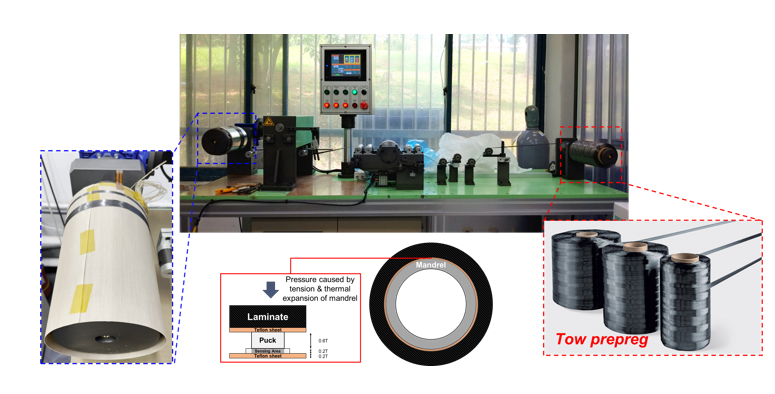
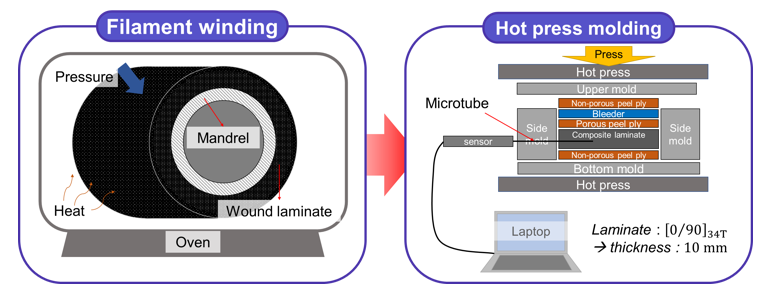
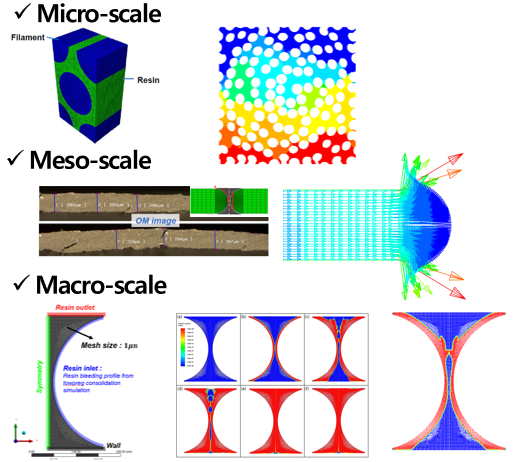
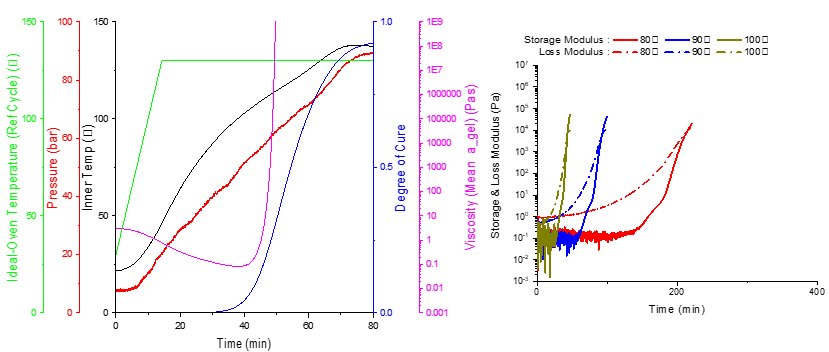
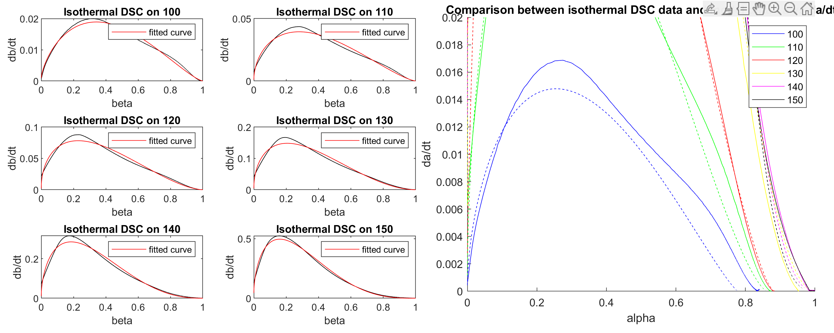
Spent nearly a year working with my colleague Sangyoon Bae at MDAM on an industry project for ILJIN. The goal: understand their epoxy formulation, characterize its cure kinetics and rheology, and develop predictive models (Kamal-Sourour and Castro-Macosko). We then measured filament winding pressure using pressure sensors and thermocouples to study the temperature and pressure gradients within the laminate. That profile was inversely applied to test specimens to investigate resin squeeze-out pressure, and multiscale simulations were built for resin bleeding and void filling. The final objective was linking all of this to burst pressure performance via ring burst tests. Great project, learned a lot from Sangyoon. Some descriptive photos on the side too from the process during the project.
Electrophoretic Deposition (EPD) of LFP on Carbon Fiber
Tools: Electrophoretic deposition (EPD) Test rig design Carbon fiber coating Hot press molding
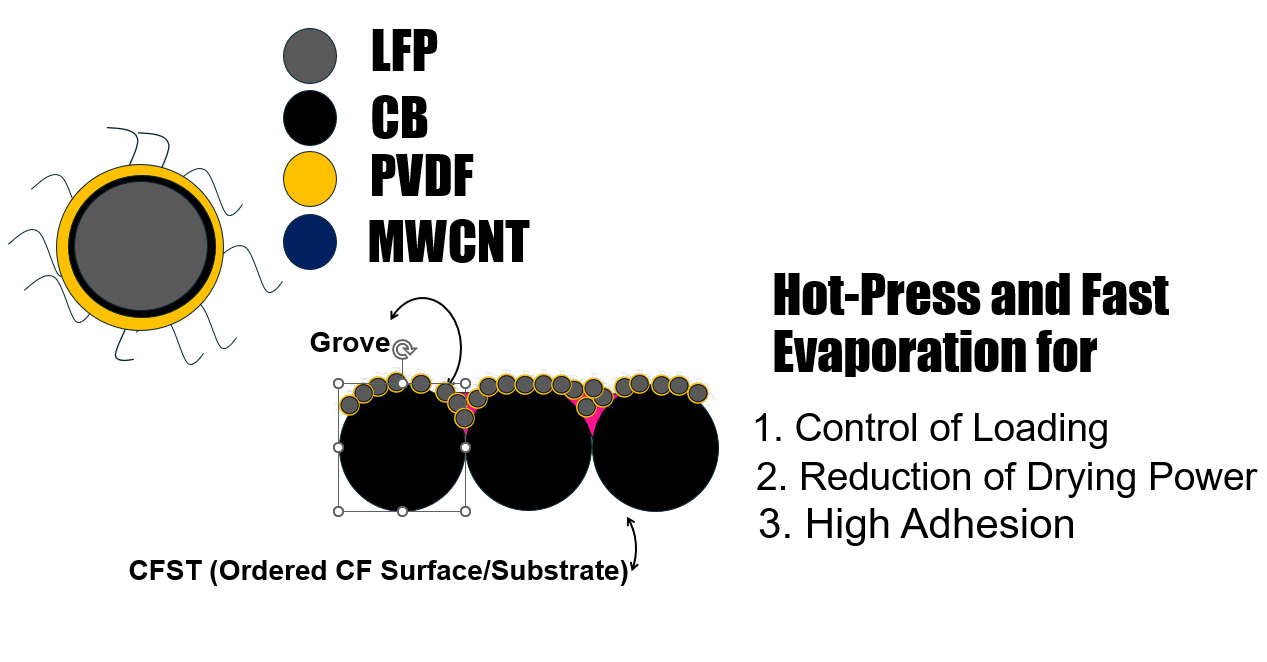
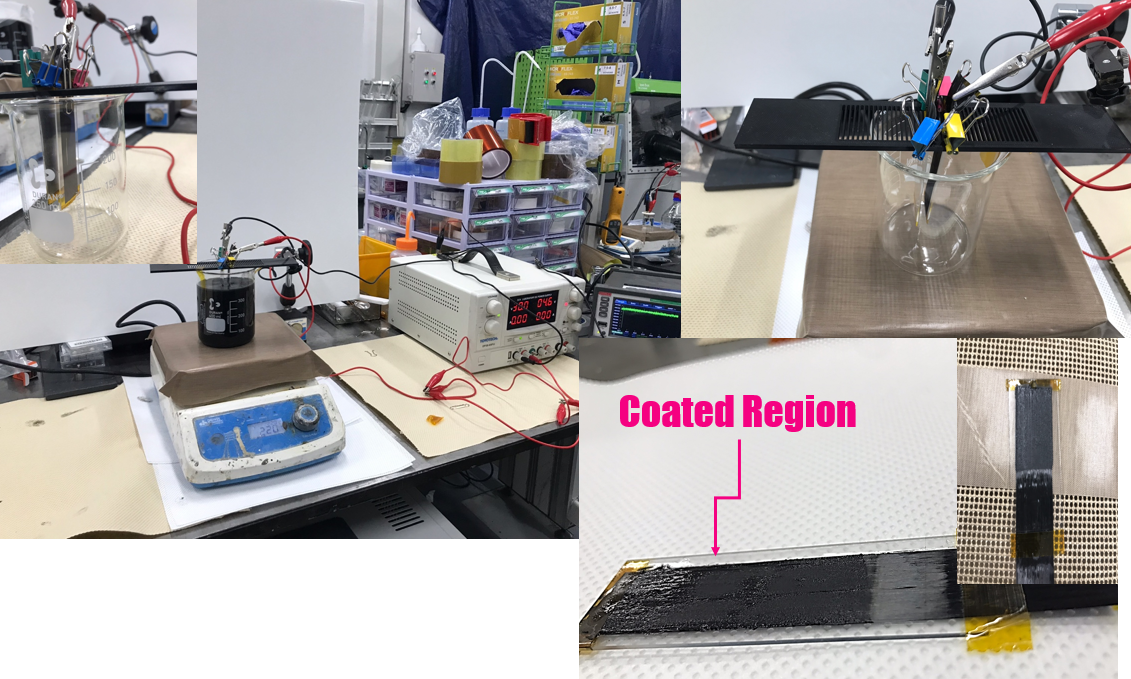
After exploring CF as an anode material, where the fibers themselves store Li ions, I wanted to push toward a full structural battery. The next step: coat the CF with LiFePO4 (LFP) to make it a cathode too. The method was Electrophoretic Deposition (EPD): suspend LFP with carbon black and binder in an acetone bath, keep it stirred, apply DC voltage, and let the particles migrate and coat the fibers. I designed the test rig from scratch and ran a parametric study on separation distance, coating thickness, and applied voltage. The results were genuinely cool. Didn’t get to finish the full investigation though, as I was wrapping up my time in the lab. The intended next step was hot press molding for fast solvent evaporation, better adhesion, and reduced drying time. Check the images for cool coatings and setup.
Integrated Honeycomb Structural Battery
Tools: Silicone molding 3D printing SPE processing Honeycomb modelling
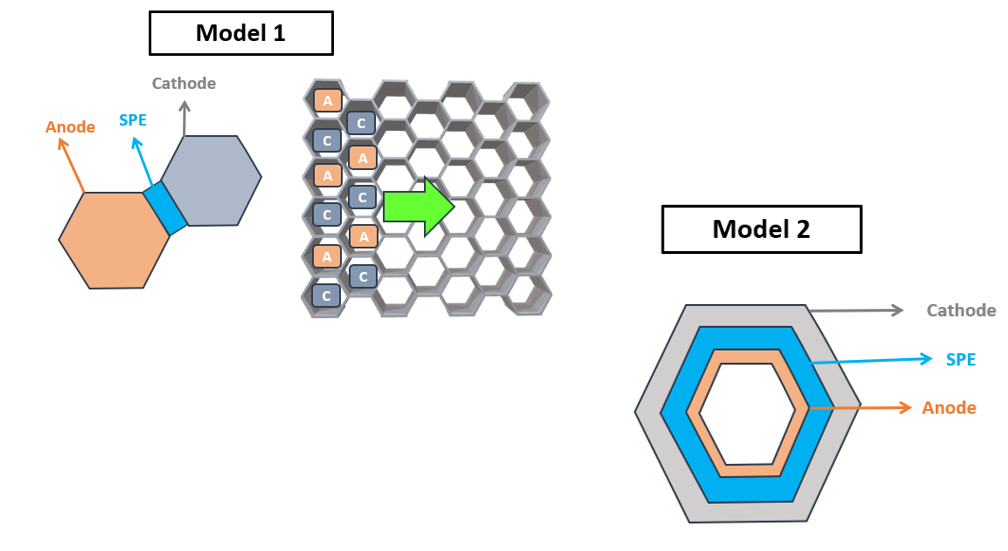
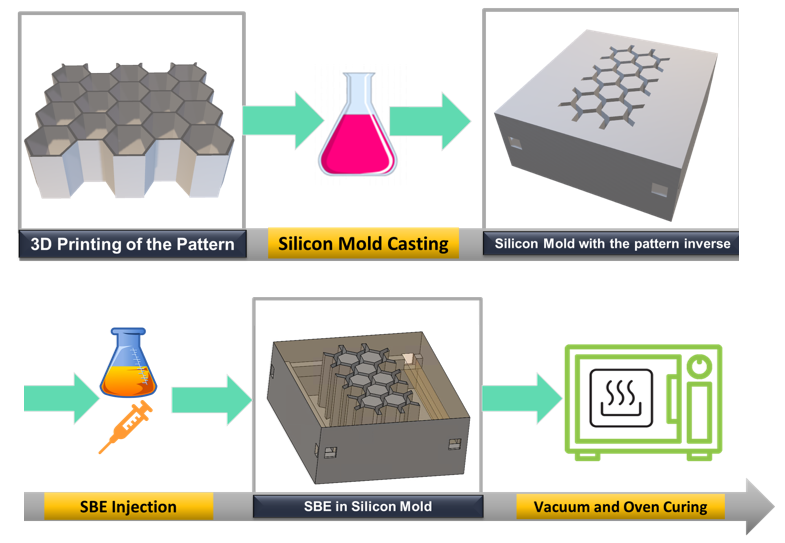
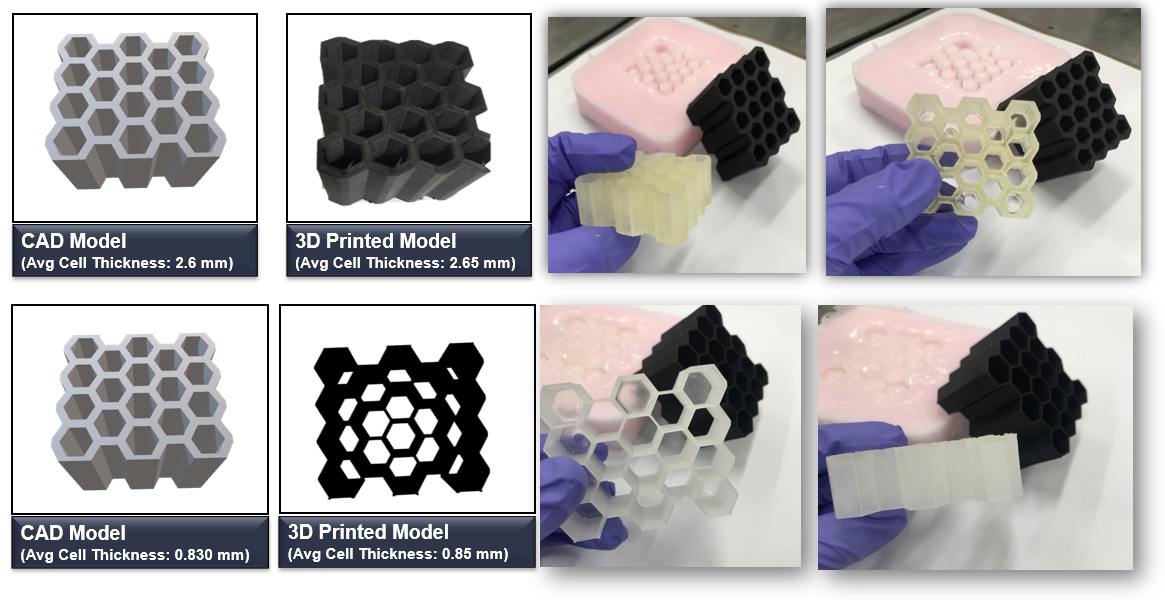
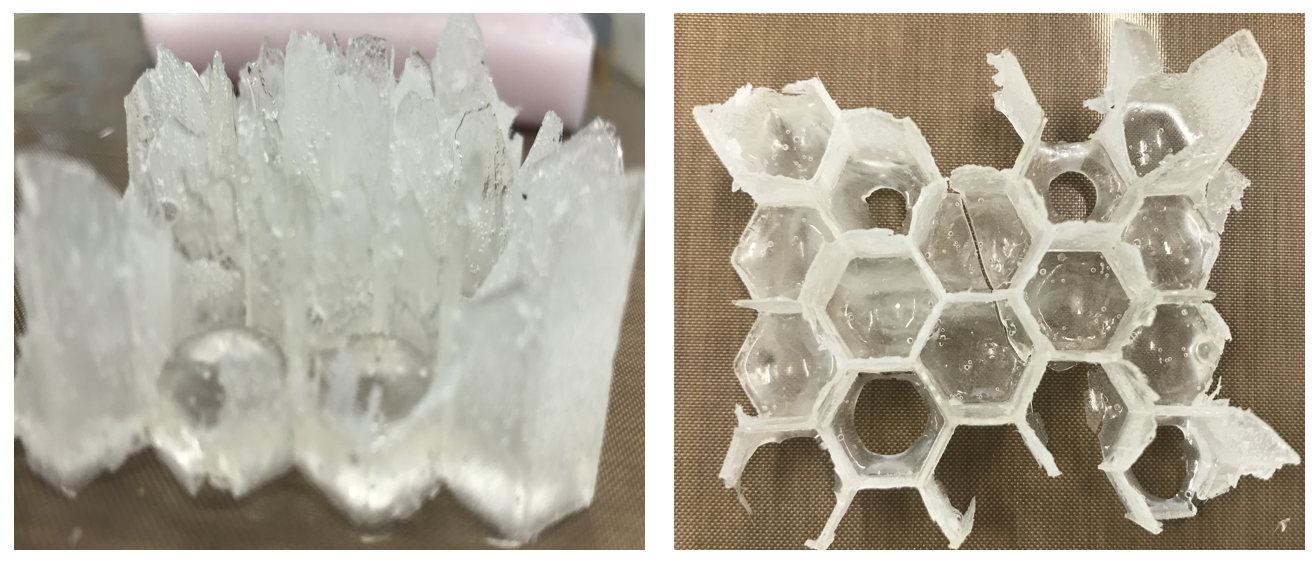
Another research direction during my MS: what if the solid polymer electrolyte (SPE) wasn’t just an ionic pathway, but had actual structural integrity, shaped into a honeycomb? The approach was creative: 3D print a honeycomb with the desired geometry and wall thickness, cast it into a silicone mold, remove the print, and you’re left with a perfect negative impression. Pour SPE into the grooves, cure, demold — and in theory, you have a load-bearing electrolyte. Tried it first with epoxy: works beautifully. Check the photos for the mold, process, and demolded specimen. With SPE though? Different story. The mechanical properties are lower, the walls needed to be thinner (to ease Li-ion transfer), and the rheology just didn’t cooperate. Demolding was a complete disaster. A glorious one. That said, this whole detour ended up contributing meaningfully to the first paper on SPE cure kinetics and rheology, so not a total loss.
Metal oxide Nanorod Coating on Carbon Fiber for Interfacial Adhesion
Tools: Metal oxide coating Microwave synthesis SEM characterization Plasma surface treatment Carbon fiber processing
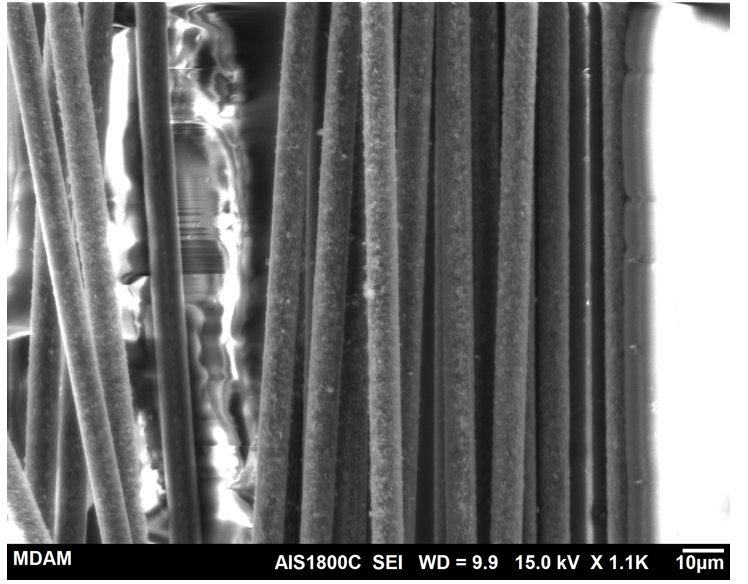
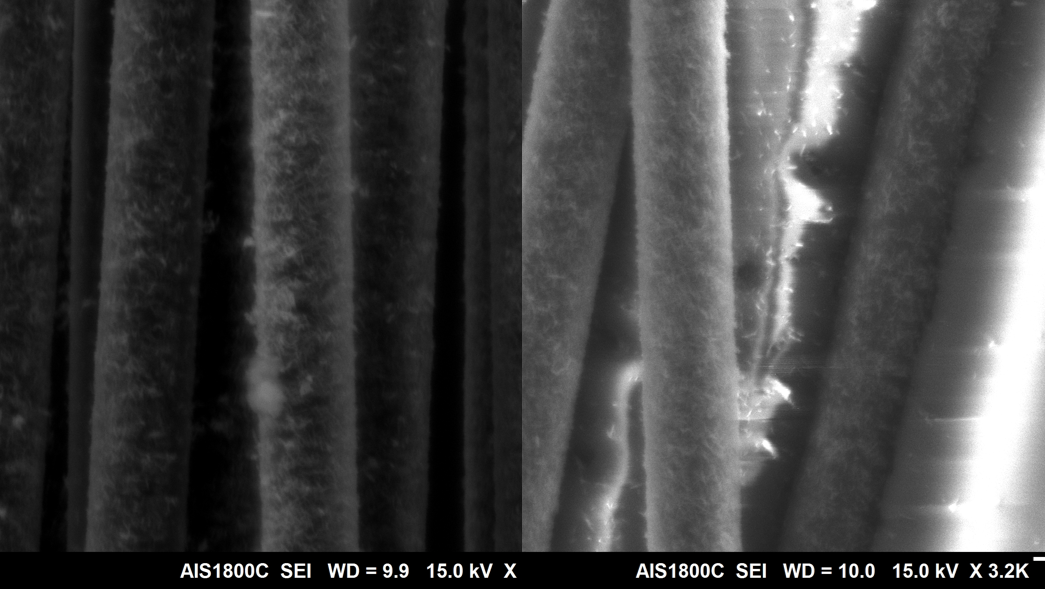
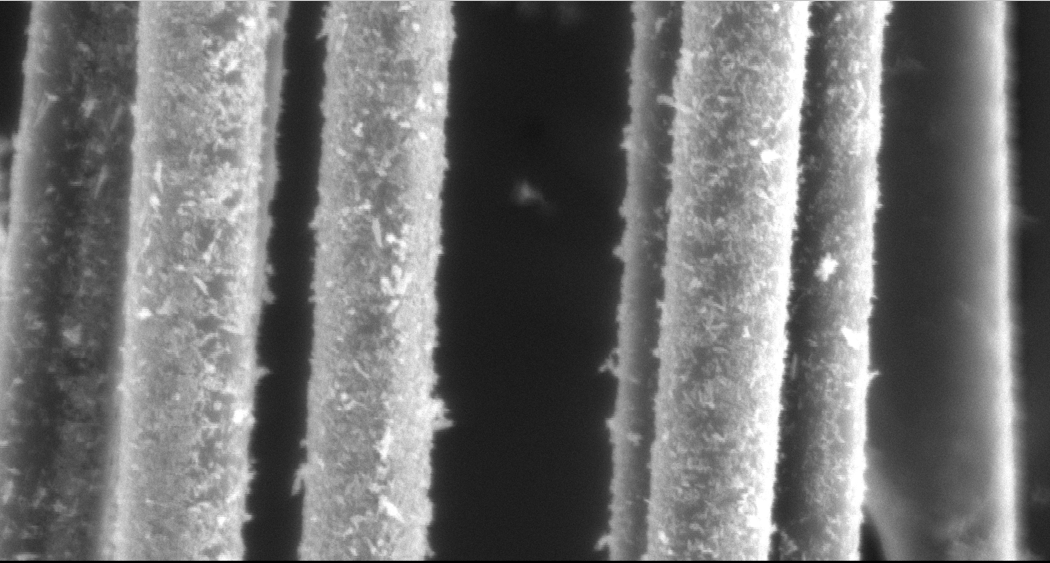
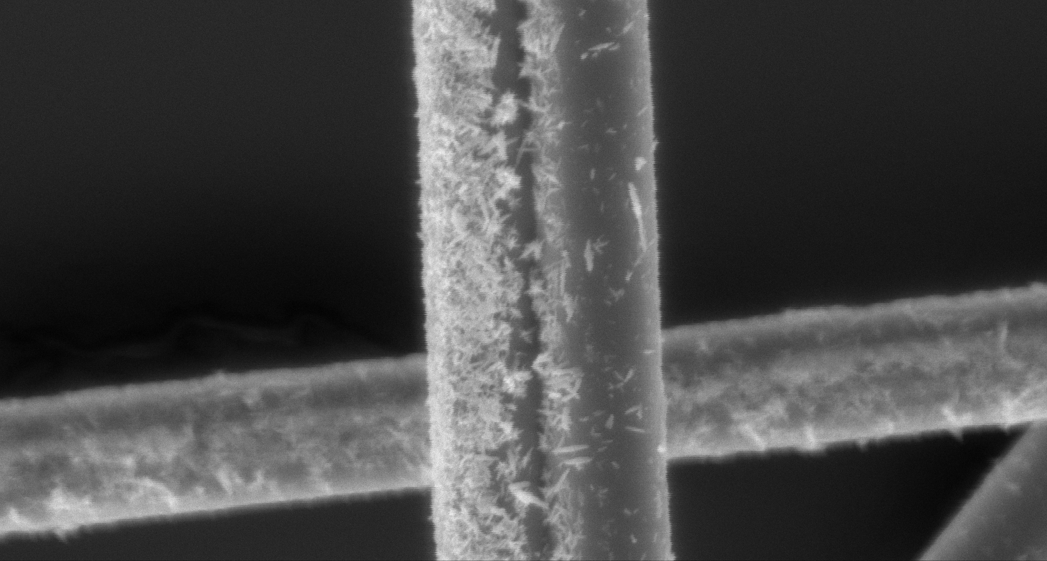
Early in my MS, I was exploring different routes to improve the interfacial adhesion between carbon fiber and the solid polymer electrolyte. One direction was depositing ZnO nanorods on the CF surface using an efficient microwave-assisted method developed by seniors in the lab, replacing conventional hydrothermal synthesis with rapid microwave radiation to form a uniform ZnO seed layer, followed by direct microwave heating to grow denser, more uniform nanorods on the fiber surface. In practice though… the SEM images tell a different story. Something did deposit, but it never developed into proper nanorods as seen in publications. My suspicion: the plasma treatment and commercial sizing on the CF interfered with growth. Eventually decided to move on; partly due to these results, partly for novelty reasons. A glorious partial failure. Check the reference for what the method looks like when it actually works.
Flexure Hinge-Based Prosthetic Hand — Printed in One-go
Tools: SolidWorks FEA Parametric optimization 3D printing Arduino EMG sensor
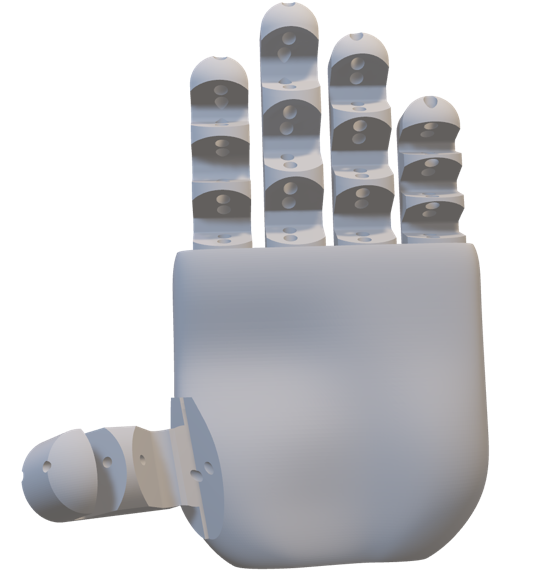
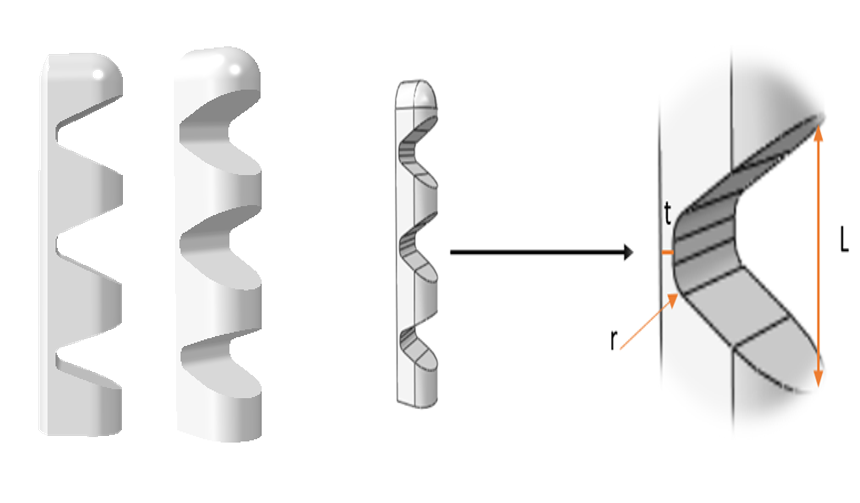
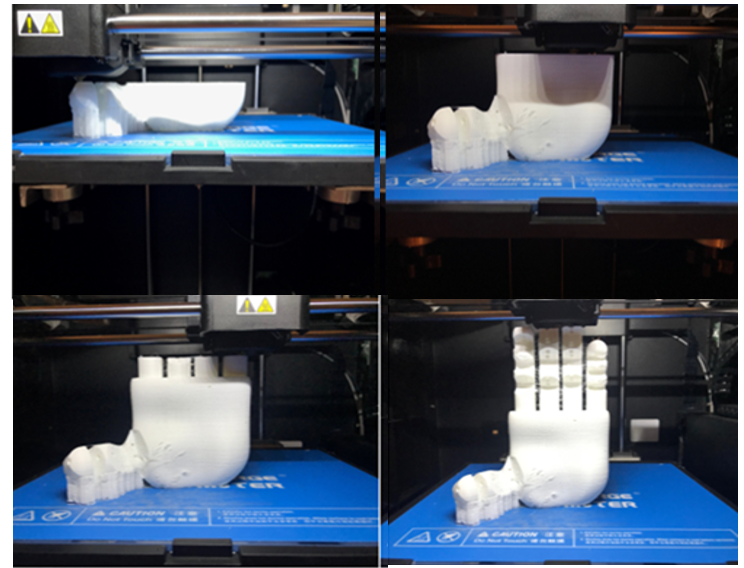
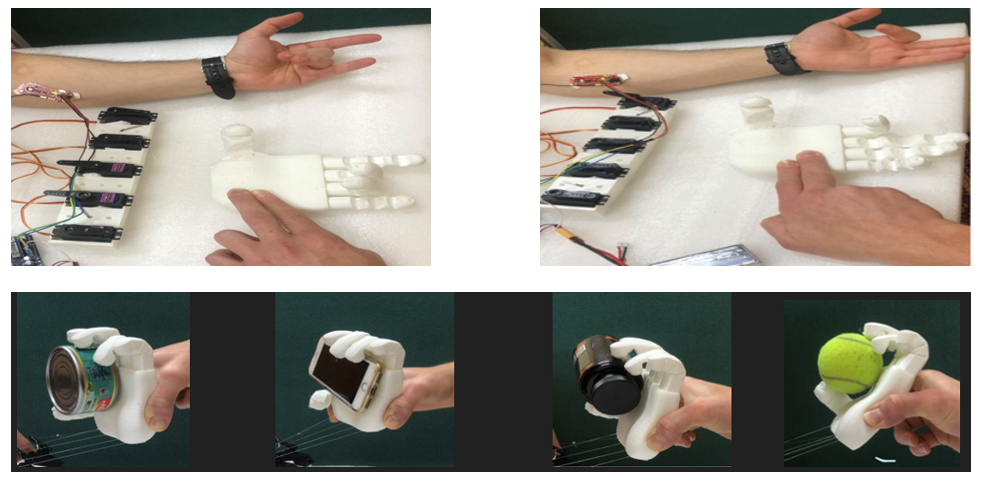
Honestly, this project is what made me fall in love with R&D. It was my BSc senior design project. I led the team, wrote a grant proposal to fund it, and we got awarded the Undergraduate Research Grant (~3000$). That covered a fancy 3D printer, TPU filaments, servo motors, Arduino controllers, and an EMG sensor to control hand actuation from muscle pulses. The core idea: a prosthetic hand with no assembly required, capable of various grasps, made entirely from compliant soft materials. We replaced the finger joints with flexure hinges and ran a parametric multi-objective optimization to tune the geometry so fingers would flex and self-return via material compliance alone. We also optimized printing conditions and infill percentages for a soft, controlled grasp. Backed it up with FEA and simulations, and then printed the full hand in under 24 hours. It actually grasped objects. Controlled by my own hand via EMG. We took 2nd place at the senior design competition and 2nd place at the largest undergraduate research competition in the MENA region. See the photos on the side :)